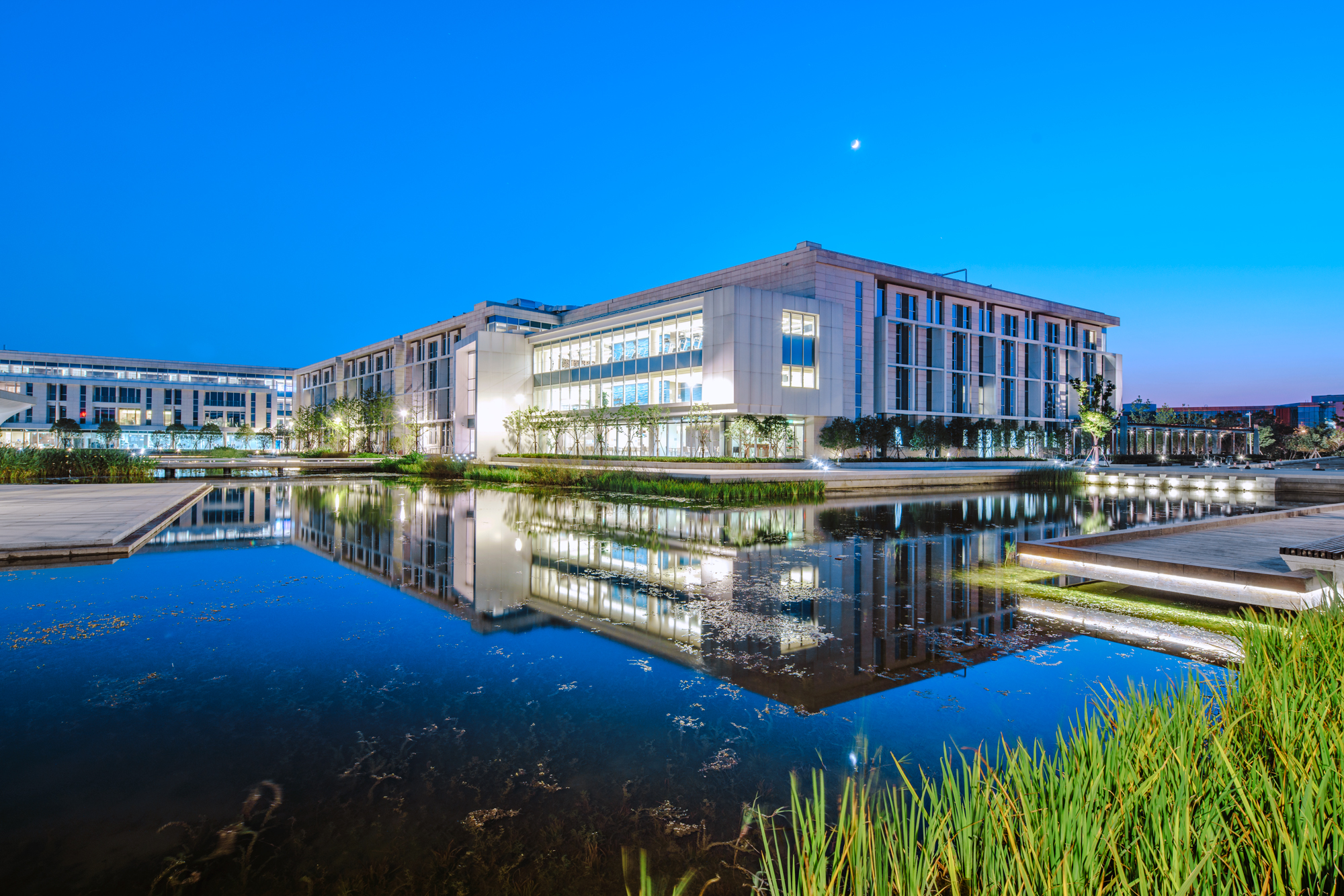
On May 15th, 2025, it was made public that two members of the United States Congress, Education and Workforce Committee Chairman Tim Walberg (R-MI) and Select Committee on the Chinese Communist Party Chairman John Moolenaar (R-MI), had sent a letter on May 14th to Duke University President Vincent Price, urging Duke to terminate its partnership with Wuhan University and thereby dismantle Duke Kunshan University, the institution Duke operates near Shanghai in collaboration with Wuhan University and the city of Kunshan.
In today's world, a global education is vital for addressing issues affecting the whole planet and eventually beyond. Cross-cultural understanding, diverse perspectives from around the world, and the ability to collaborate effectively across borders are all crucial attributes for smooth cooperation and steady progression towards solving some of the most difficult challenges facing humanity.
Presently, a concerning number of prestigious universities in the United States and beyond place a very weak emphasis on the significance of a modern, international education that gives students and researchers the best possible opportunities in countless aspects, even beyond academia. Well-known universities such as Harvard undeniably carry immense historical weight, though they remain stuck with aging campuses, deteriorating infrastructure, and outdated architecture. While old buildings, for example, can very well hold charm and tradition, architecture is more than mere aesthetics; it shapes how people feel, think, and collaborate. A future-oriented university should create an environment that feels alive with possibility, one that inspires innovation, global thinking, and bold ideas the moment you step on campus. This, essentially, is practically nonexistent, not just in the US, but anywhere.
Though, the key word is practically. There are rare gems, like Duke Kunshan University, that reimagine what education and research can be. Other institutions, such as NYU Shanghai, also pursue global integration, though DKU stands out for its strategic location, seamless bridge between East and West, and true focus on modernity. Forward-thinking, globally integrated, and architecturally alive, DKU represents what the future could look like for humanity. And yet, it faces opposition from the United States Congress, which has expressed concerns largely rooted more in speculation than in fact. These concerns are not due to any failure on Duke or DKU’s part, but rather a hesitation to accept a model that challenges traditional boundaries. While some argue that partnerships with Chinese universities pose risks, they often overlook the clear structure, transparency, and shared governance of Duke’s collaboration with Wuhan University. The reality is that DKU operates with strong safeguards, academic freedom, and values aligned with Duke, far outweighing the speculative concerns raised.
Below are just some of the key facts that evidence DKU's embrace of Duke values and the university's commitment to transparency:
- Duke Kunshan's board of trustees is chaired by the Duke University Provost, and includes members from Duke University and its two partners, Wuhan University and the Kunshan City Government.
- From the start, Duke explicitly referred to Duke Kunshan as the backbone of an "international Duke," making it clear it's not just a Chinese university, rather, it's a core part of Duke's international presence, built on the same values and principles.
- Duke Kunshan consistently emphasizes academic freedom and free expression, aligning with Duke's values. Duke has stated themselves that academic freedom and unrestricted access to information are two of the founding principles of DKU.
- Furthermore, DKU’s student handbook explicitly guarantees academic freedom, equal access to information, and protection of privacy rights, again directly aligning with Duke’s values.
- DKU is a legally independent entity established in partnership with Duke University, Wuhan University, and the city of Kunshan. While it operates collaboratively, most core aspects, especially academics, are guided by Duke. DKU follows Duke’s academic standards, uses Duke-designed curricula, is governed with Duke’s oversight, employs Duke-affiliated faculty, and awards Duke University degrees to graduates. It stands as a direct extension of Duke University’s global network.
- The partnership has attracted significant external funding, including a commitment of approximately $3.6 million from the Gates Foundation for vaccine research, evidencing trust from respected international organizations.
For a detailed look at the inaccuracies and missing context in the Congressional letter, see this recent article from The Duke Chronicle.
By building bridges rather than walls, DKU exemplifies a vision for the future that Congress should embrace, rather than attack.
It's also important to note that Duke's decision to establish a campus in China was not arbitrary, it was precisely intentional. China has become a significant player in research, advanced technologies, infrastructure, and more. Duke Kunshan University, in turn, stands as a bold bridge between two of the world’s most economically powerful and technologically advanced nations, in the East and West, uniting cultures, ideas, and ambitions in a way traditional institutions have yet to imagine, or at least execute.
Of course, every university has its flaws, and Duke’s school in China is certainly no exception. I myself could probably write paragraphs outlining them. But at least that's a list I can make, because Duke University has done something worth critiquing. They’ve built a true, functional bridge between East and West, developed an environment that inspires, and pushed research and education beyond borders and beyond standard convention. I, unfortunately, can’t say the same for many of the so-called elite institutions, which have played it so safe and stayed so stagnant that there’s no list to write, just an absence of vision where ambition should be.
I believe in a future shaped by inspiration, international education, collaboration, and above all, peace. This is a vision I believe is worth defending. These values were a major part of why I created Sora, though not the only reason. That is why we must not let Duke Kunshan University, one of the strongest pioneering symbols of that vision in the academic world, be shut down by politics.
DKU itself cannot achieve this vision flawlessly, but as a real and committed effort to pursue it, DKU is worth defending.