Modern-day universities are barely worth attending. In many cases, you spend $250,000 just to be able to get a good education and valuable degree, at a place that is outdated in terms of technology, teaching methods, and environment. University is not even necessary today for learning; you can self-learn pretty much anything associated with any college major all on the internet. Whether it's computer science, physics, or aerospace engineering, all learning material is available on the internet for virtually completely free. A few incidental costs may come up, but they pale in comparison to university tuition.
So, is university even really worth it today? The answer isn't really a simple yes or no, but there is certainly an extremely disappointing number of massive flaws at universities today that could be fixed with the right leadership. If you just want to learn something, even if it's complicated, like the physics behind spacecraft and how they are built from the ground up (similar to aerospace engineering), university is absolutely not necessary or even worth it. However, if your goal is to get a job in the field you're studying, then you will, in most cases, probably need a university degree for this, as employers (whether it's a private company or government agency) often require you to have a degree in the relevant field. However, that doesn't make university any more inherently useful for learning or for the university experience. As I said in the beginning of this post, university is barely worth attending today.
The flaws of modern-day universities don't mean we should outright eradicate the idea of universities. They are very useful for a number of reasons. Almost all academic research that leads to eventual technological advancements (benefiting humankind and even saving lives) comes from prestigious universities, obviously. They also provide a foundation for learning, albeit a presently very inefficient one, considering the number of recent technological advancements in areas like AI that have yet to be properly integrated into universities.
What we want to do is make university, without a question, absolutely worth attending again, for students/learners and researchers. Not because we want money or prestige, but because we genuinely want to add the maximum amount of inspiration, excitement, and happiness to the world. Was high school exciting or inspirational for you? What about college? Your answers to both questions were probably "no" and that's what we want to change. Having access to a good education, in a good, inspiring environment with the latest technologies shouldn't cost any money at all. Although we can't get around this issue entirely at the moment (free education), we can do better than forcing students to pay double the amount of money their family has, to then suffer crippling debt for years to come.
What do we mean by making the most "futuristic" university and how will we accomplish what we're describing? Well, it's certainly no easy feat, that's probably the first thing that came to your mind. But we are bound only by the laws of physics, not by standard conventions or common beliefs. Firstly, we want to integrate artificial intelligence into university education and research to teach students in the best possible way, and help researchers in the best possible way, tuned to each individual's preferences in learning and research. Everyone learns differently, even if the difference between learning preferences isn't that big. That's why tutors exist, but they are human too, and can't be perfect. University education shouldn't consist of a tired, uninspiring old professor carelessly teaching some fixed lesson content to a giant room. This isn't right. This should change, so we're developing a series of artificial intelligence models known as Luna, and we want to use these AI models to generate lesson content for students based on how they learn best and their personal preferences. We also want Luna to be able to interact with the student in real-time, using visual effects, voice, and/or text. Here's an outline of some of Luna's features for Sol University:
- Lesson Generation: Lessons can be sequentially generated for the student based on their personal preferences. Luna bases the generated lesson content on fixed content that Luna is trained on. It will ensure it covers all topics thoroughly before moving on, ensuring you have just as good of an understanding of the material as every other student, while teaching it to you in a way that suits you best, based on your personal learning preferences.
- Live Interaction: Luna doesn't just generate a lesson for you and then leave it to you. Integrated is live voice, or text-based interaction (you choose), combined with visual interaction/interpretation, to help you learn best if you struggle with any concepts. If you have a question or are struggling, you can simply ask Luna. In the future, we also aim to integrate eye-tracking AI software using Solara computers (but with support for other computers with a camera) to actively track where you are in a lesson, to see where you're taking longer amounts of time so Luna can ensure your complete understanding of those topics/concepts later.
- Visual Examples: If you're a visual learner, Luna can illustrate visual examples of the given concept for you. If the given subject/topic is inherently visual (for example, the structure of a heart or kidney, microscopic cells, etc), Luna can generate highly realistic 3D visual, interactive examples for you.
- Testing your Knowledge: Luna ensures your understanding of all the taught concepts and ideas by quizzing you on them. It quizzes you in a way that considers how the human brain fundamentally works, so Luna can ensure your inherent and complete understanding of the given concepts.
- Real-time Knowledge: Although Luna largely operates using training data for the given subjects and concepts, it also, especially for researchers, has full but careful (not blindly trusting every source) access to the internet. This means that Luna is up to date with the latest developments and advancements in the world. This is extremely beneficial for researchers that will be at Sol University, and is great for students who want an example of a taught concept in the real world, in practice, today.
- Persistent Sessions: Luna remembers all of your previous interactions with it, and when you ask it a question or interact with it, it considers all info provided to it thus far as context. For example, if you're struggling with a concept related to derivatives in Calculus, Luna can remember you struggled with other similar concepts in mathematics before and can adjust how it responds and helps you accordingly. For researchers, opening a new "session" with Luna means that all info you provide to Luna in that session, and any info Luna collects during that session, will be preserved for the entirety of the session. The session can last anywhere from hours, to days, to months, to years, whether it's for a specific case study, an experiment, or general ongoing research in a certain field. Luna remembers what you tell it, and it remembers what it tells you, and uses all of that data as context when you ask it something else. This is particularly useful.
These are some of the primary features that we plan on integrating into Luna. Sol is currently a one-man operation, so nobody should expect super major developments for the time being, but this is what is planned for Sol. However, some basic work on Luna and Sol University's modern online portal has already begun, largely using the Python and Rust programming languages.
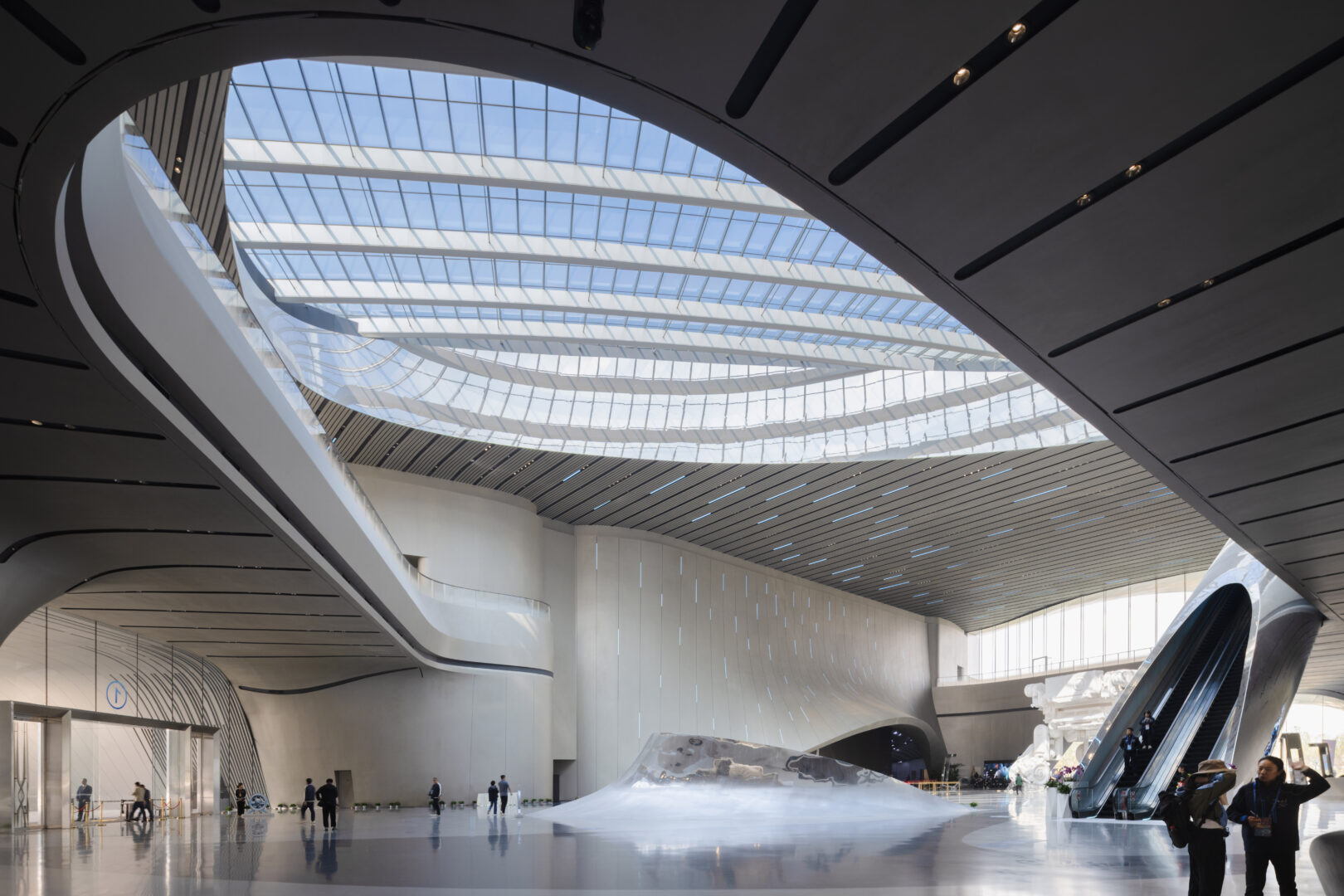
AI integration is just one part of what makes Sol University the, hopefully, most modern and futuristic planned university in the world. As we said, the environment of universities is also extremely important. Architecture is a big part of that. Can you imagine if NASA's headquarters was a wooden hut in Mississippi (the least developed US state)? Or if Microsoft's modern-day headquarters consisted of a bunch of dusty trailers parked on a desert lot? We get that some of these kinds of companies may have started out that way, but they have no excuse for not having a modern headquarters today. Of course, this isn't the reality for Microsoft or NASA, but it is for many of the "prestigious" universities in the world. The appearance of Cornell University, for example, is extremely uninspiring to say the least. But honestly, this may reflect their overall outdated nature, so one could say that it does make sense and would not fall under the wooden hut example we gave. Regardless, the point is, "advanced" universities shouldn't look like garbage. It's an extremely big part of the university environment. Going to school every day in a wooden hut does not inspire much hope in students. Much more is expected from a place that claims to be at the forefront of education and innovation. A university's physical environment should reflect the ambitious goals of its students, researchers, and team. This isn't just about aesthetics, it's about creating a setting and environment that fuels and maximizes creativity, enthusiasm and excitement, inspiration, and forward-looking innovation. For this reason, Sol University's physical campuses will be extremely modern, futuristic, and inspiring. We mean this not in the sense of some dumb retro sci-fi design, but rather, in a realistic, future-first sense, like the image seen below.

Location is also important. As we said, it would be weird for a company on the cutting edge to place all of its headquarters and operations in the middle of a desert. We hope to have locations in some of the most modern, opportunistic, innovative, and inspiring cities of the world, which brings me to my next point. We are not bound by conventional borders or boundaries, and we are not aspiring to be a single university in a single region in a single country. We aim to be international, with locations worldwide, much like how NYU has a location in New York, Shanghai, and Abu Dhabi. The world is more than a single country, and we want to benefit the whole world with the most inspiring university experience, beyond just basic education.
Universities often fall into traditional structures and practices due to their long histories, established norms, and complex bureaucracies. Many universities prioritize preserving their reputation and their research funding, which makes them resistant to change and innovation. Even with significant resources, they often take a conservative approach, focusing on what has "worked" in the past instead of embracing bold, futuristic ideas. Our vision is far more than just education. It's about creating an environment that's immersive, creative, beyond inspiring, and designed to truly inspire and nurture each student's potential.
Although Sol University's content and Luna are on the internet, physical presences serve as beacons of inspiration, futurism, and an overall forward-first innovative mindset. It's a big part of learning. Taking a lesson in your dark basement, even with our described AI features integrated into it, will not be very conducive to learning or inspiration. Physical experiments and research (either conducted by students or full-time researchers) would also be conducted at Sol University physical locations.
Our point is that universities should be one of the most inspiring places in the world, and it's extremely far from that today. We're creating Sol University to completely change this, for the whole world. We know this will be extremely difficult, and we know it takes a lot of money and effort, we are not denying that this is an arguably close-to-impossible feat. But how did every technological revolution start? Look at Steve Jobs in the case of Apple, Bill Gates in the case of Microsoft, and Elon Musk in the case of SpaceX and Tesla. They prove that anyone can accomplish anything they imagine. That's not saying they're dumb yet successful; those 3 people are incredibly intelligent, but the point is, they're still human, and if they can make a dent in the universe, so can you.
If you'd like to join Sol in making this inspiring future an eventual reality, please email us at [email protected] so we can get in touch. Humanity can have an incredible future, but it won't happen by itself, people need to put in effort to make it happen.
Thanks for reading!
^Xiao/Jacob